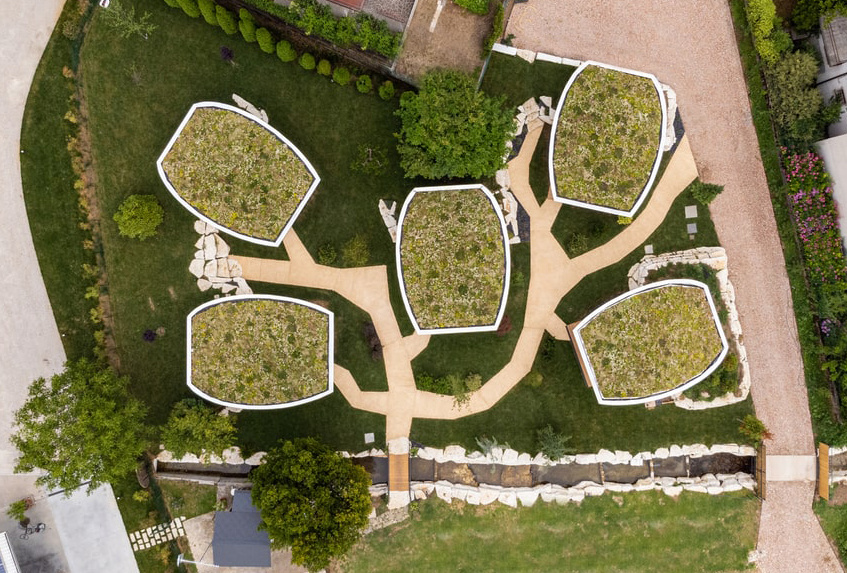
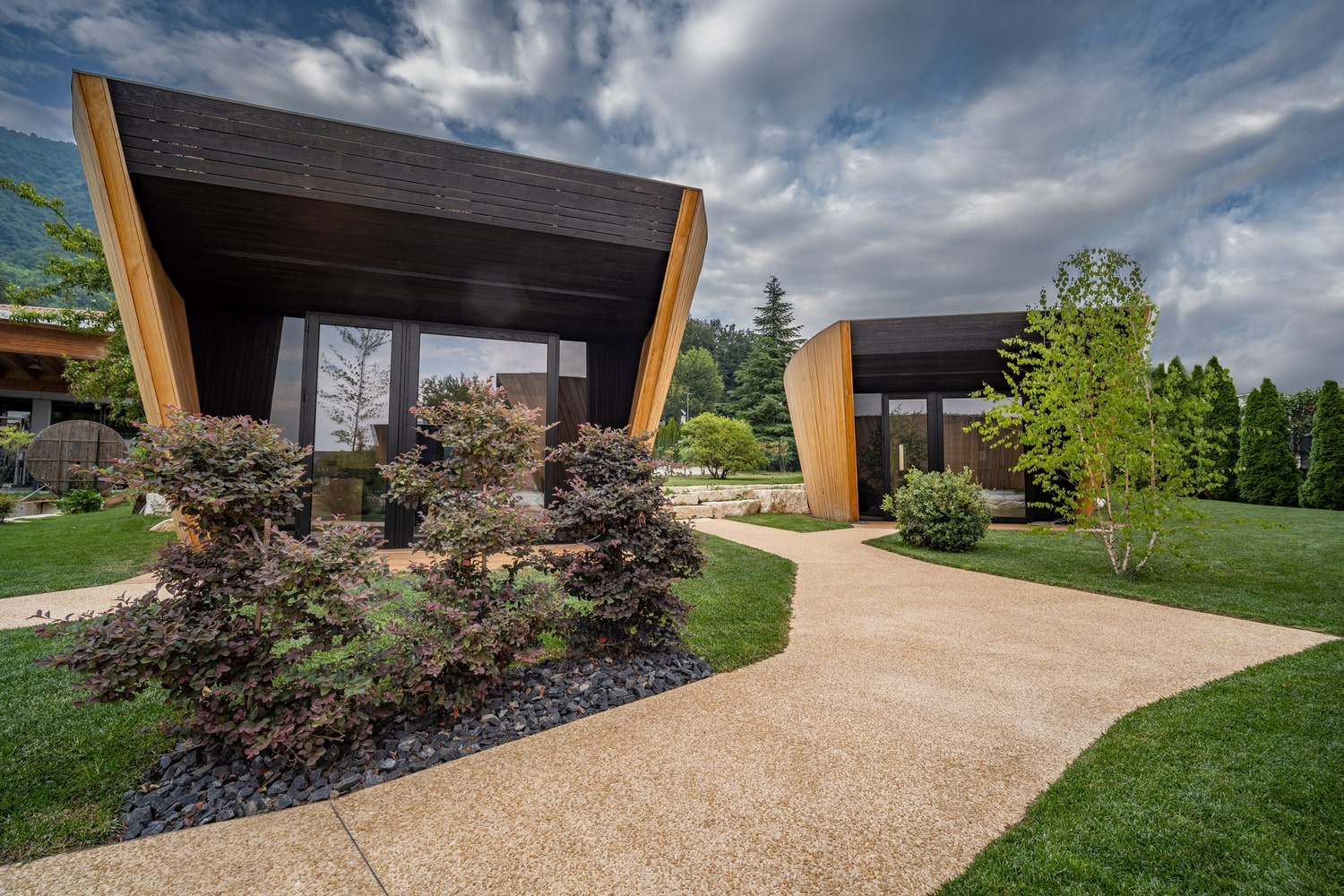
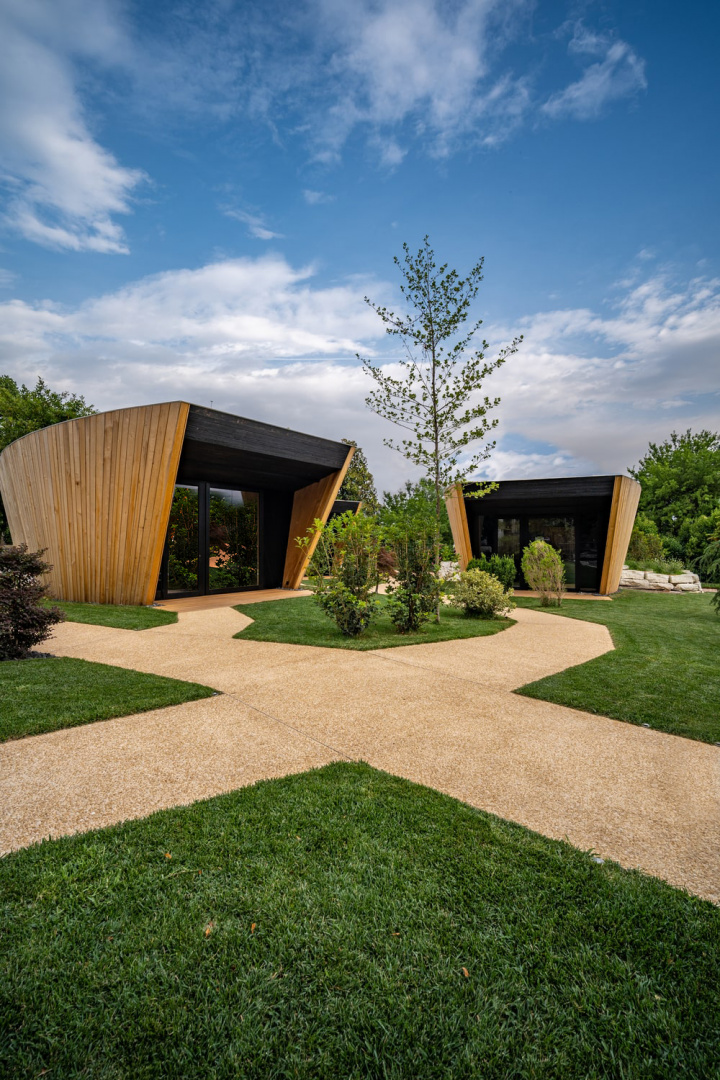
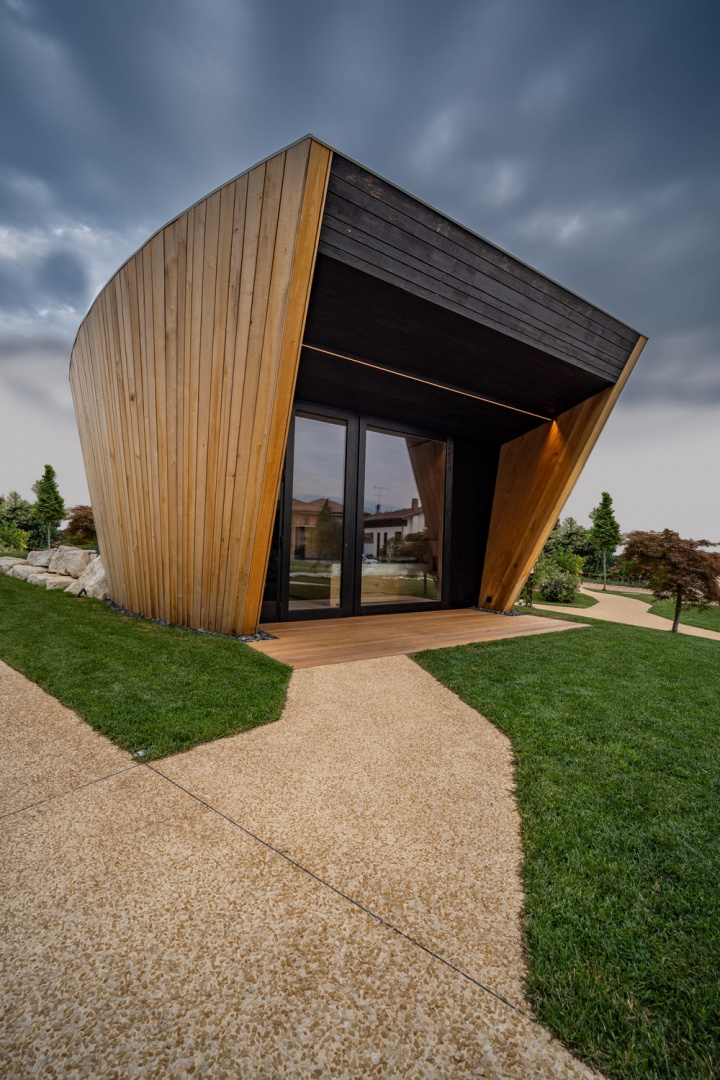
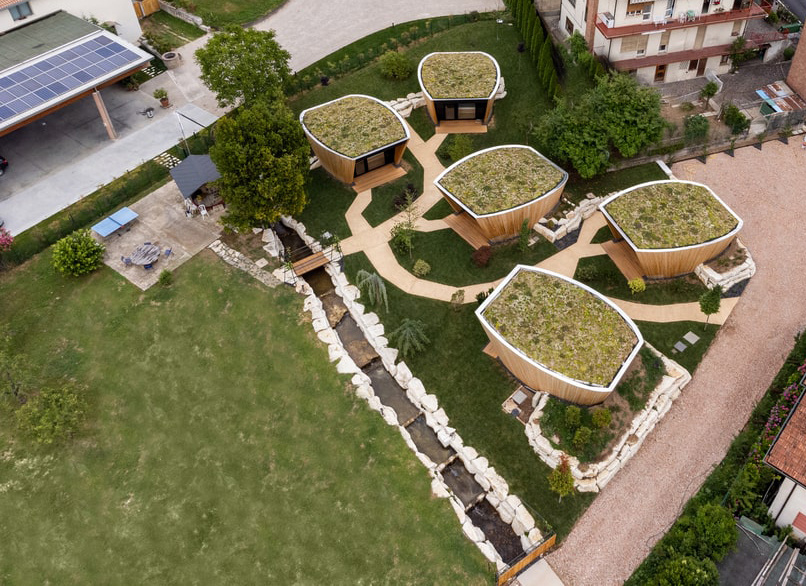
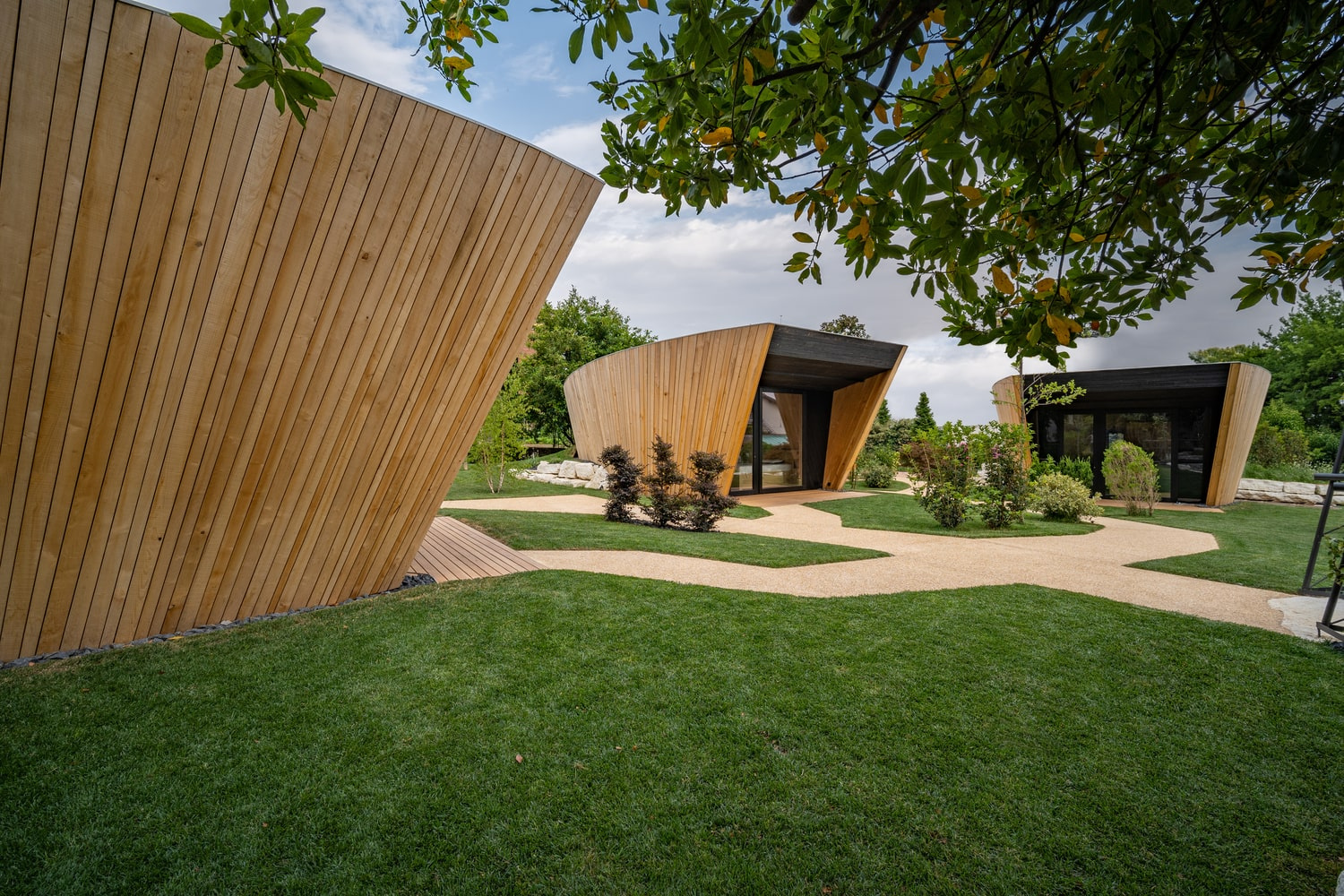
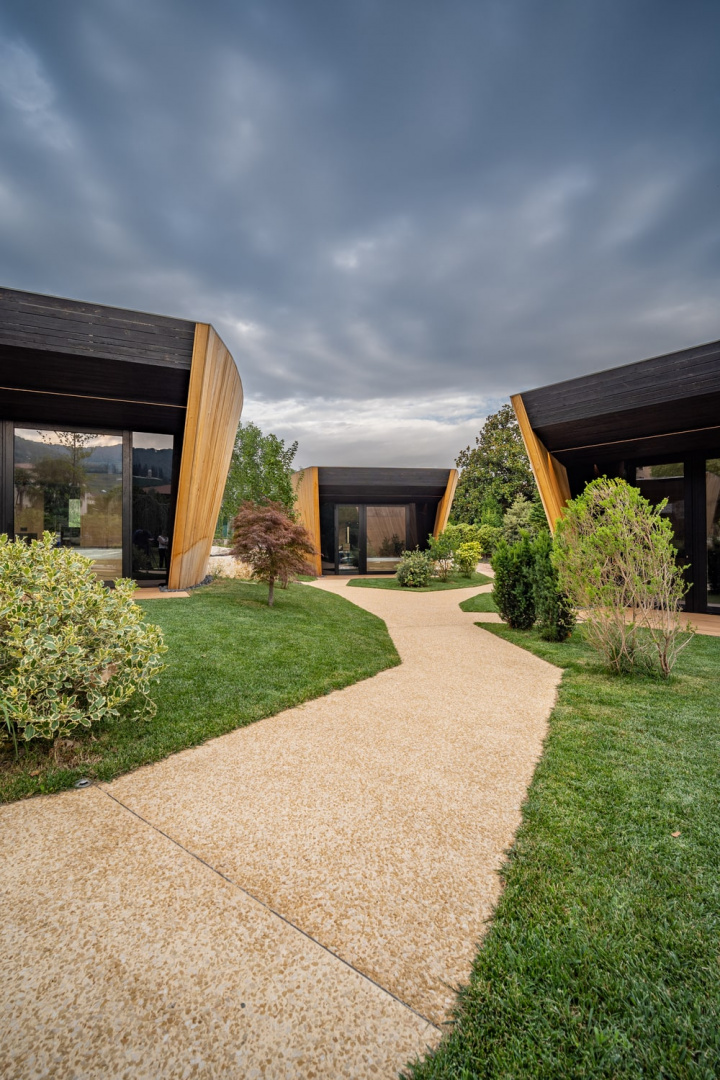
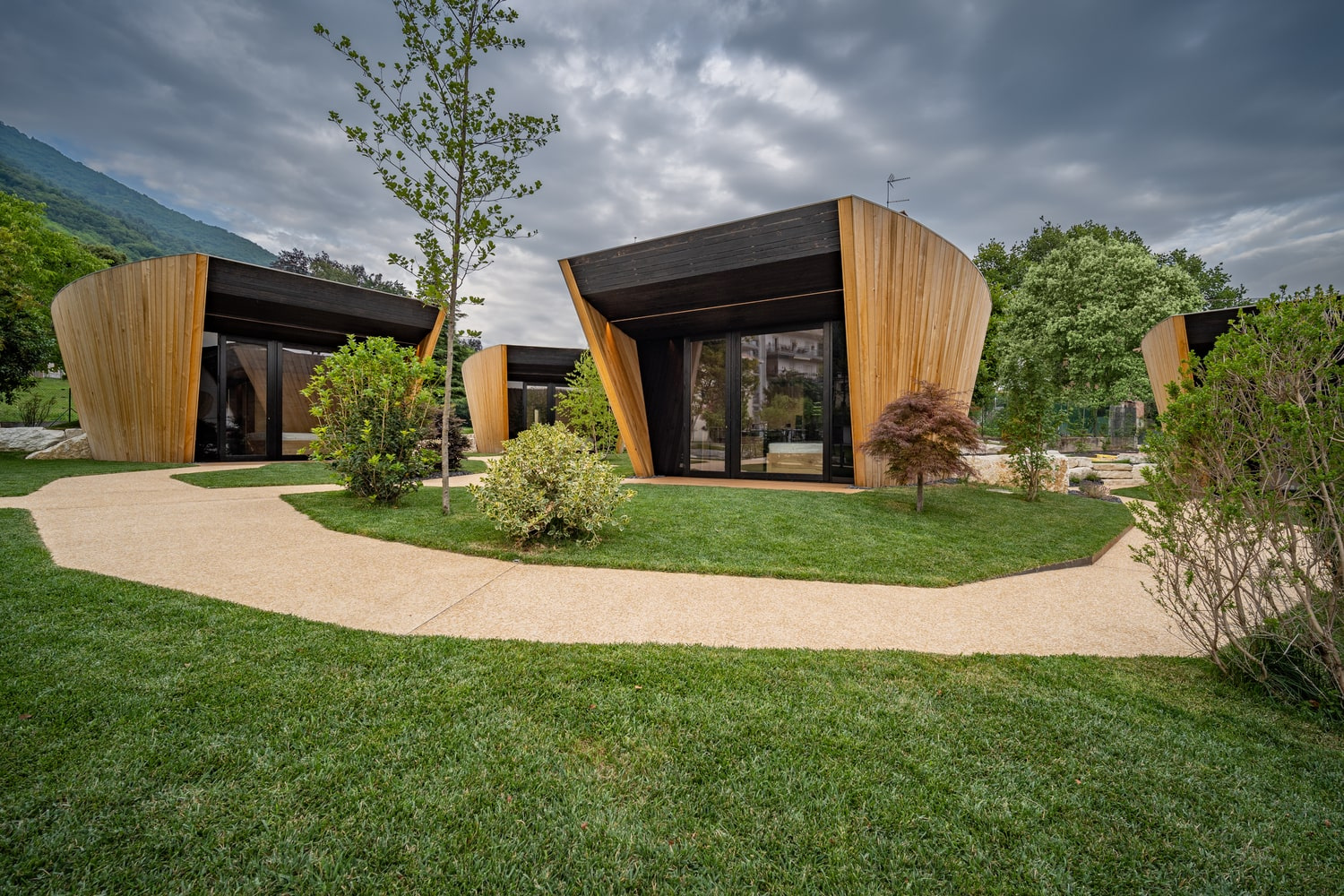
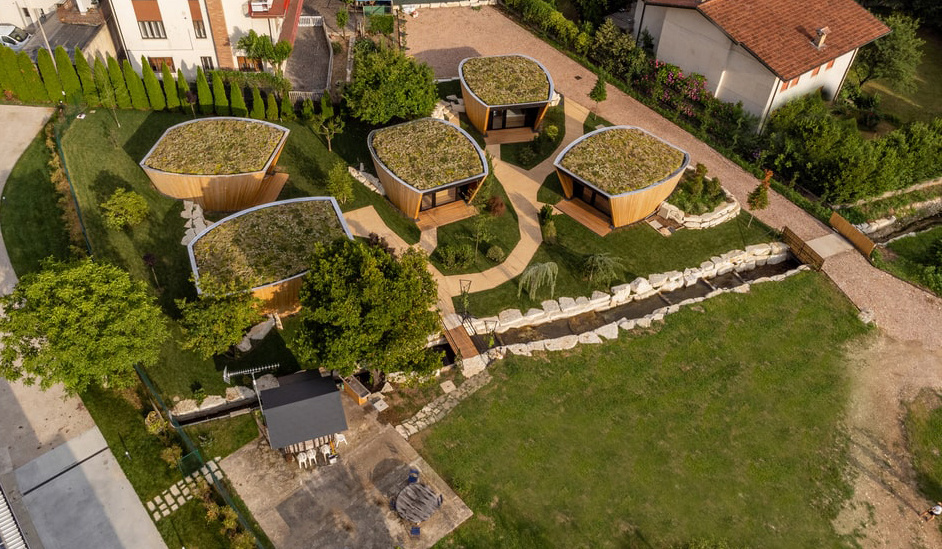
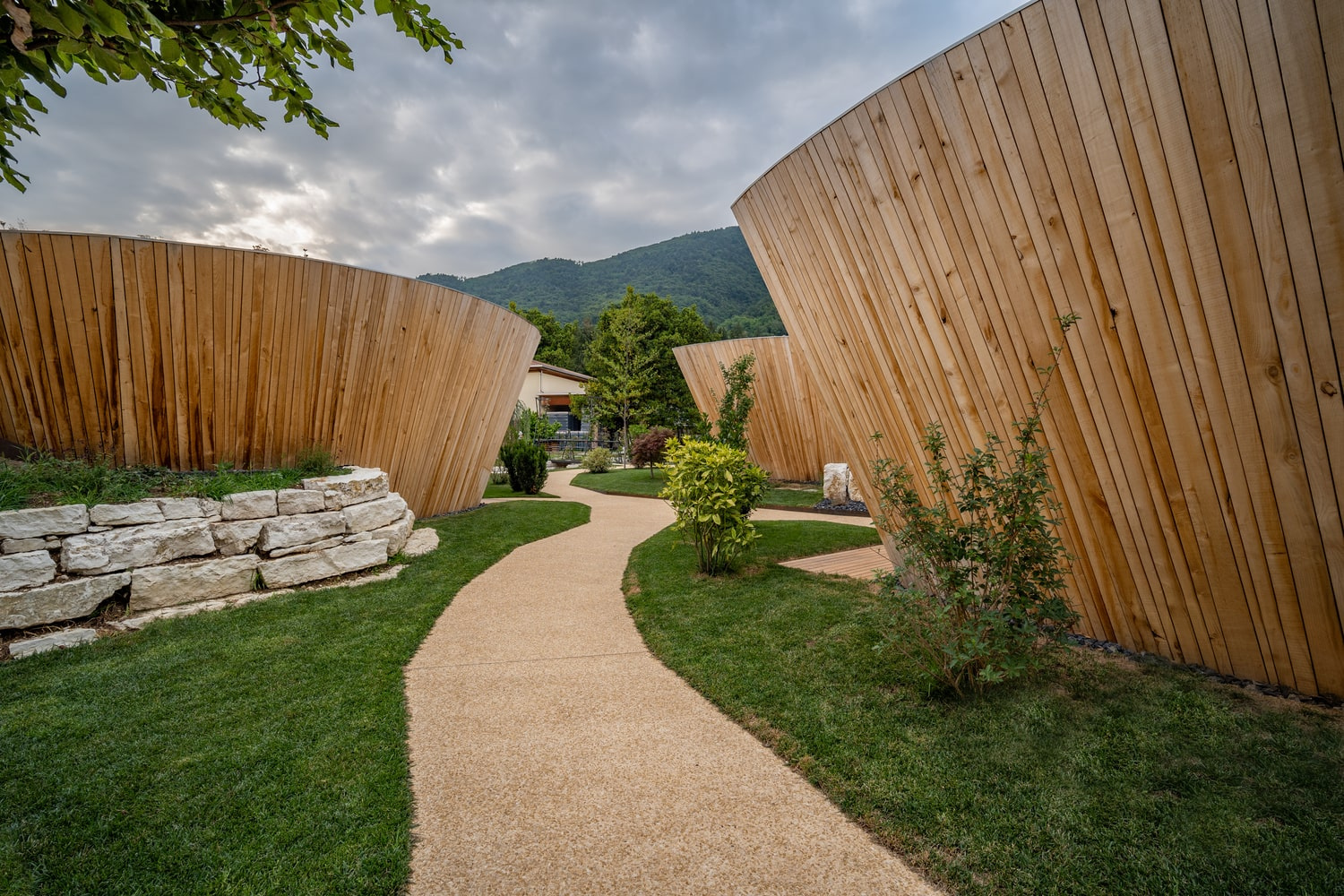
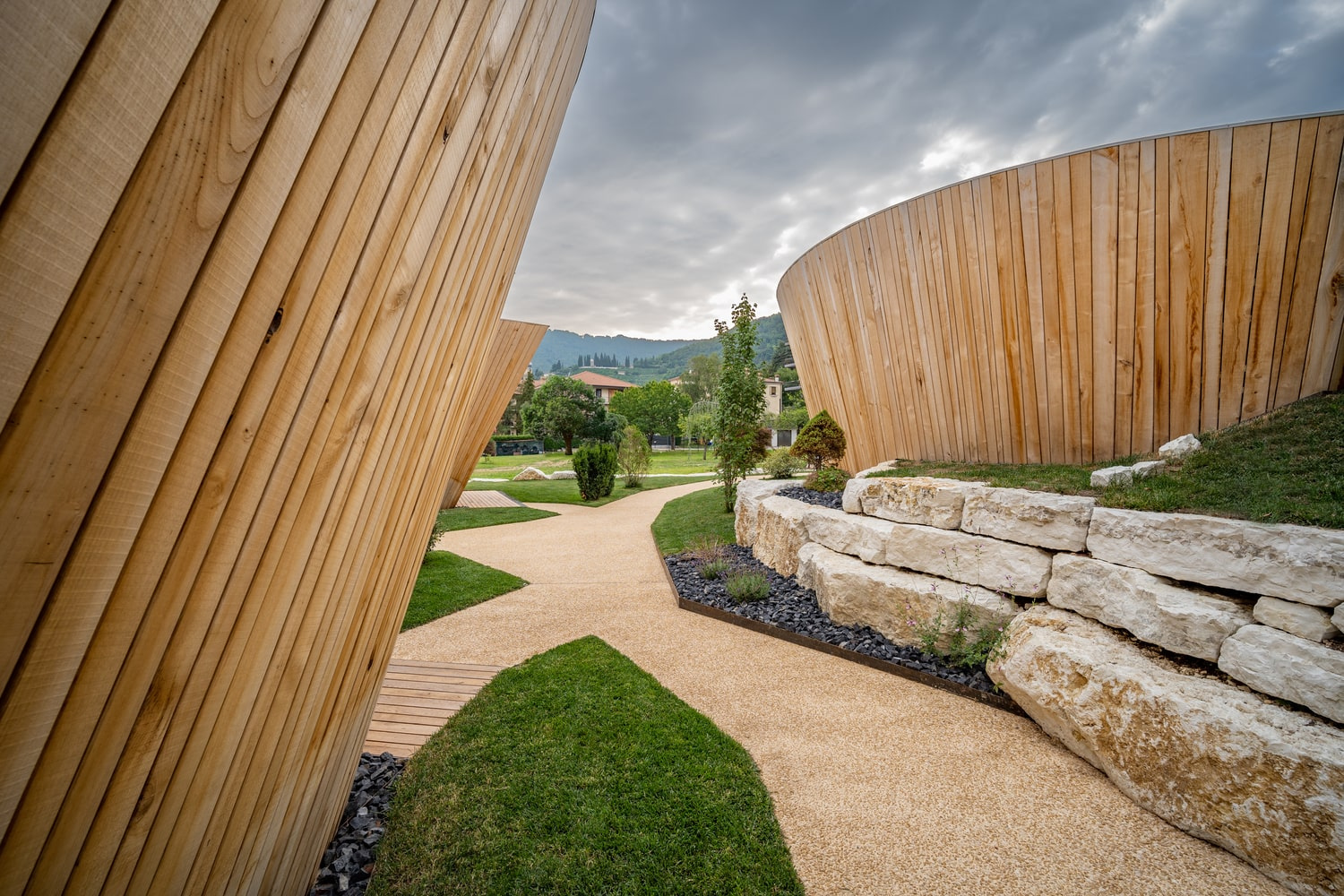
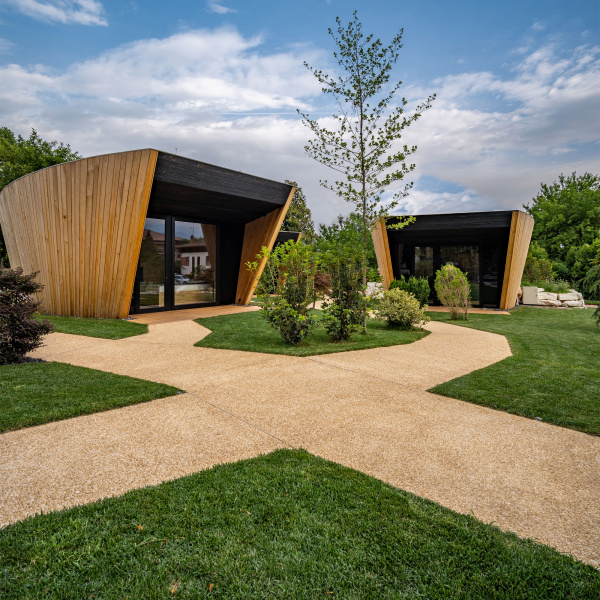
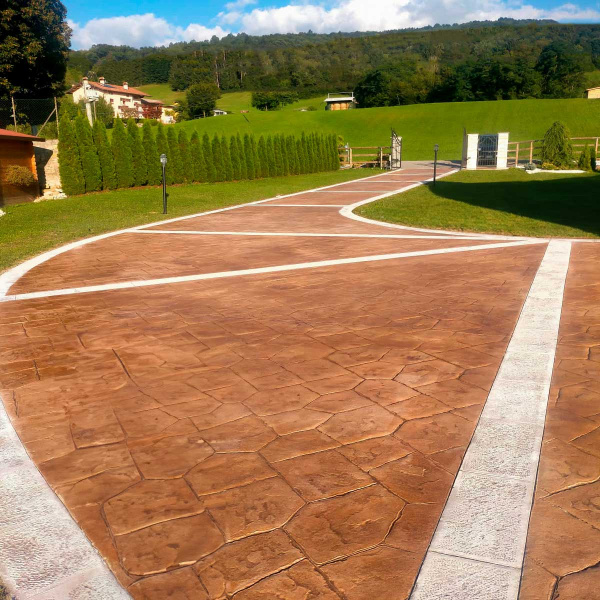
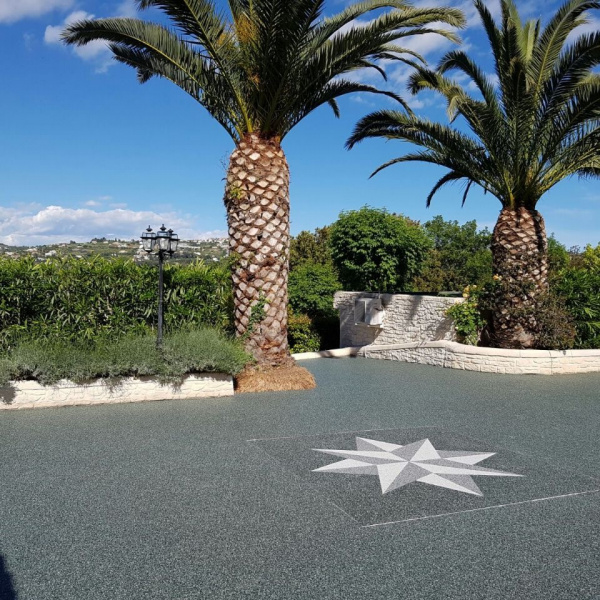
The intervention for Roggia dei Cedri in Valdobbiadene (Treviso) concerns the construction of external paving for a dispersed hospitality complex, set within the hilly landscape recognised by UNESCO as a World Heritage Site of the Prosecco Hills of Conegliano and Valdobbiadene. The architectural project includes five small independent buildings, clad in natural chestnut wood and equipped with green roofs, conceived as rooms–mini apartments with independent access. In this context, the core theme of the project is the creation of pedestrian pathways capable of guiding guests between the different volumes without altering the landscape balance of the site.
The client requested the creation of continuous outdoor walkways with a strong material and chromatic identity, able to blend into the ground and dialogue with the wooden buildings, while ensuring resistance, slip resistance and long-term durability. The end client contacted Isoplam directly, having become familiar with the company through previous projects, asking to translate into paving the organic design developed by the architectural studio: a branching layout inspired by the shape of a tree, coherent with the natural character of the site and the presence of the water channel running through the property.
The choice of exposed aggregate paving and local materials
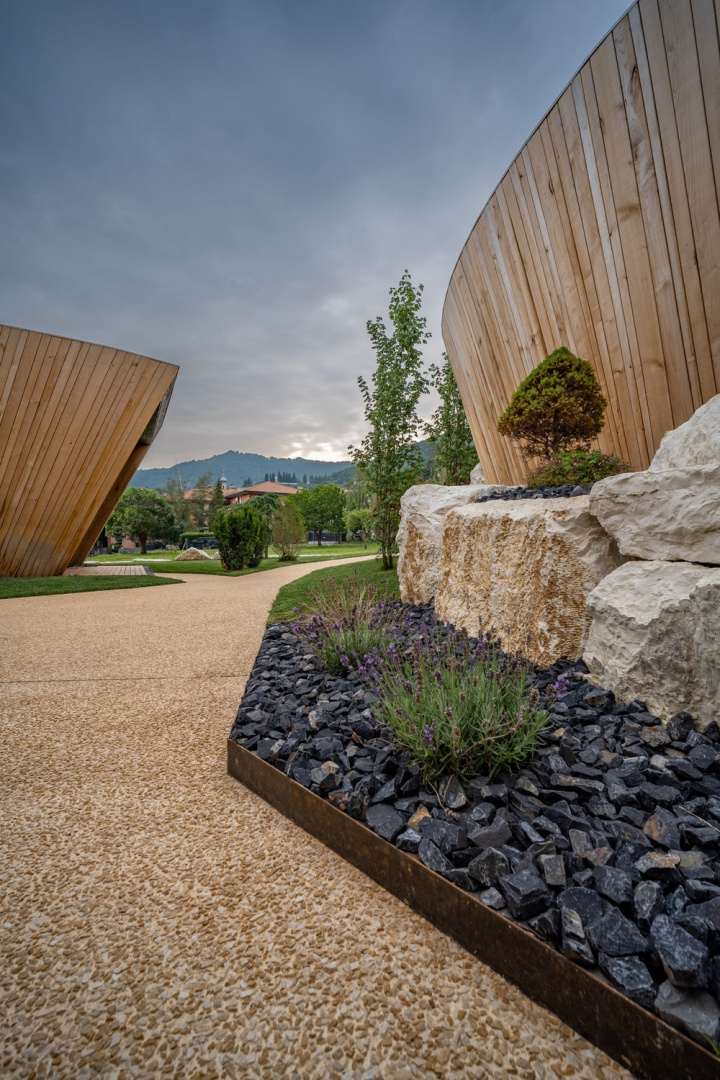
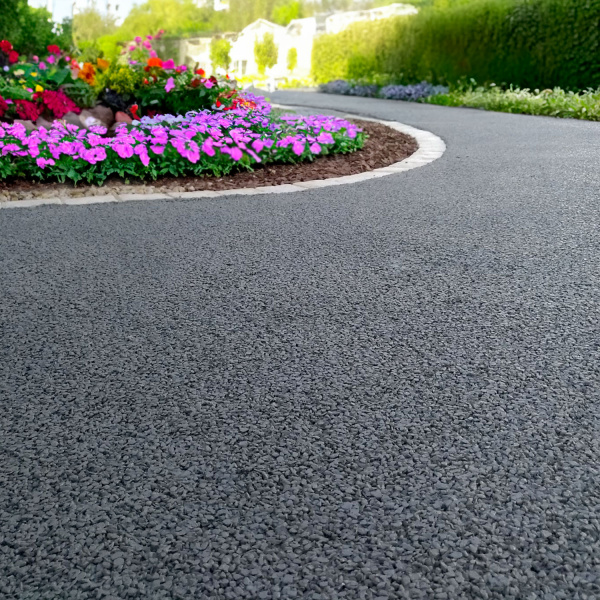
Isoplam was involved during the definition phase of the intervention, prior to the start of construction, to identify a technical solution compatible with the environmental and logistical constraints of the site. The response was the use of ItalianTerrazzo, an exposed aggregate paving system for outdoor use: a surface composed of marble aggregates and pebbles sourced from local quarries in the Veneto region, mixed on site with a pigmented powder binder, capable of providing a warm and natural base tone. The use of local materials reduced the impact related to transport and logistics, strengthening the project’s coherence with sustainability principles.
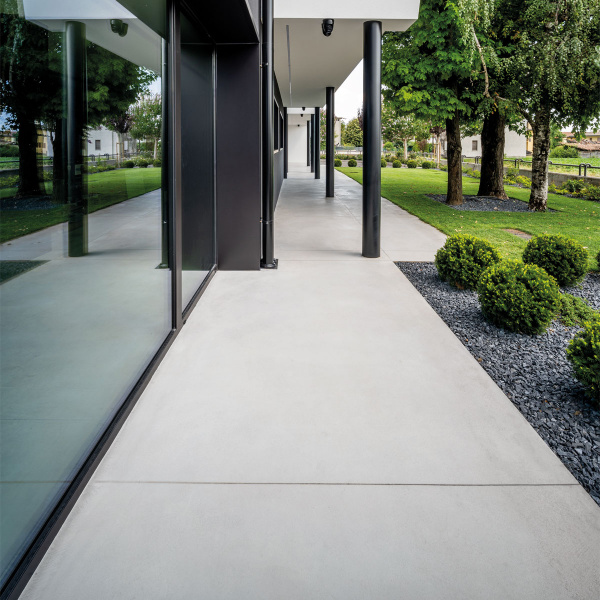
From a technical standpoint, the paving was installed over a supporting screed, with a thickness of approximately 3 cm. The mix, manually prepared on site, was poured within pre-installed shaped formworks and metal joints, which define the pathway layout and remain integrated into the final surface. The application of a surface retarder allowed, after washing, the exposure of the aggregate, resulting in a rough, slip-resistant and water-repellent finish, where water flows laterally without being absorbed.
Site management and final result
The work was carried out entirely by specialised Isoplam craftsmen, in close collaboration with the client and the design team. The main challenges concerned logistics: limited site access, the need to avoid heavy machinery and the geometric complexity of the pathways required an artisanal site organisation, with manually prepared mixes and work phases interspersed with curing and drying times. Over an area of approximately 200 m², the intervention was completed in about ten days, including substrate preparation, installation, washing and final protection.
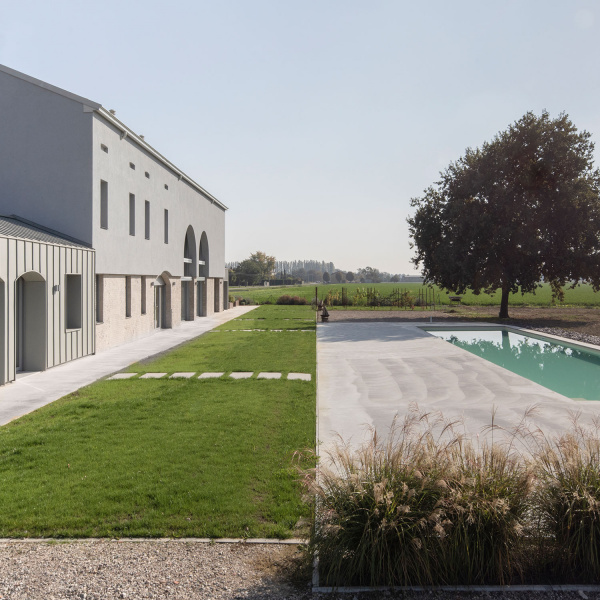
The result is a continuous, tactile paving surface deeply integrated into the landscape, where the technical precision of the ItalianTerrazzo system combines with a strong artisanal component. The pathways discreetly weave between buildings and greenery, enhancing the relationship with the water channel and offering a walking experience consistent with the site’s natural and quiet identity. The intervention is best described as a highly specialised artisanal construction rather than a simple product supply: a bespoke project in which consultancy, application and process control converge.
Roberto Zancan Roberto Zancan, PhD, is a professor of architectural history and theory at HEAD-Geneva (HES-SO). He was Deputy Editor of *Domus*, Head Curator of the Inside the Academy Program for the BE OPEN Foundation, and Associate Researcher of the UNESCO Chair in Conservation and Regeneration of Urban Heritage at the Iuav University of Venice and the Canadian Centre for Architecture. He is also the founder of the Ground Action group, whose works have been presented at the official sections of the Venice Biennale, Ljubljana Design Biennale, Lisbon Triennale, and Manifesta Marseille.